








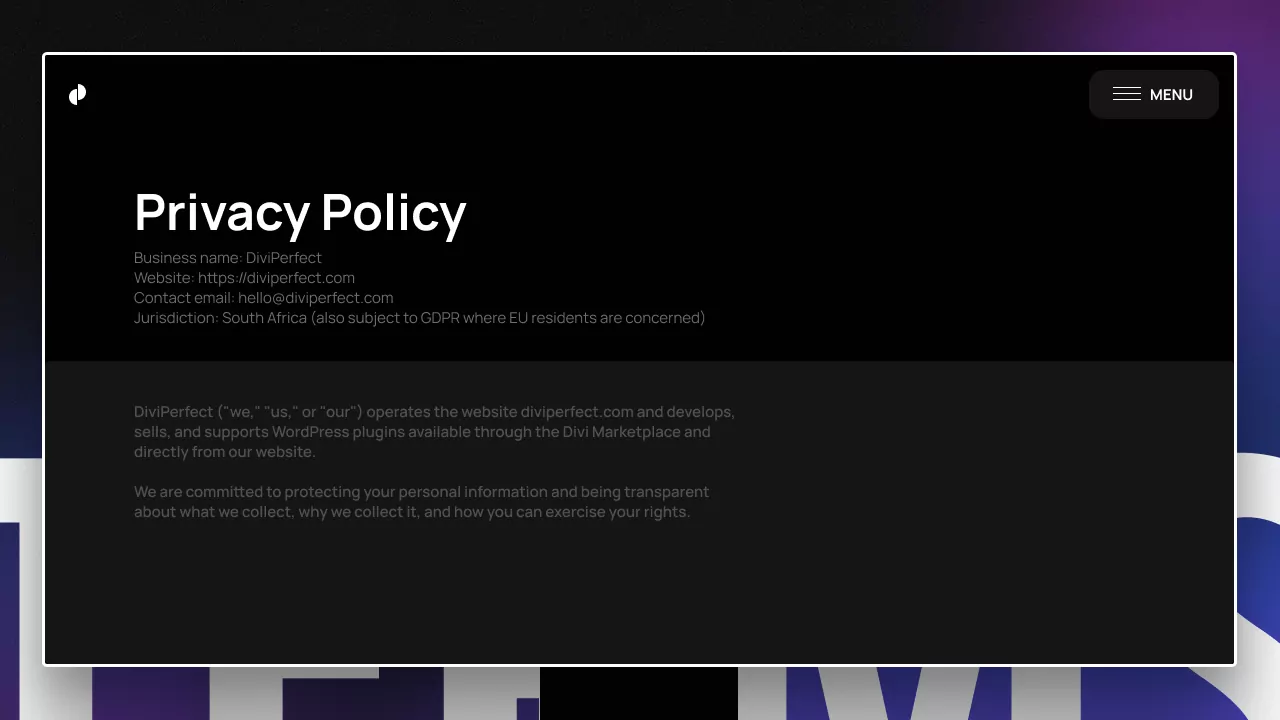
A privacy policy tells visitors what personal data you collect, why, and what you do with it. It's not just good manners — for most websites it's a legal requirement, and it's something users increasingly look for before trusting you with their information. Here are ten tips for writing a clear, trustworthy privacy policy.
Please note: this article is general guidance, not legal advice. Privacy laws vary by region and change over time. For a compliant privacy policy, consult a qualified professional or use a reputable, up-to-date generator suited to the laws that apply to you.
1. Understand why it matters
Privacy regulations around the world — such as the GDPR in Europe, the CCPA/CPRA in California, and POPIA in South Africa, among others — require many websites to disclose how they handle personal data. Beyond compliance, a clear policy builds trust. Know which laws apply to you based on where you and your visitors are.
2. List what data you actually collect
Be specific about the personal data you gather: names, email addresses, payment details, IP addresses, analytics data, and anything collected through forms or cookies. You can't accurately disclose what you haven't mapped, so audit your site first.
3. Explain why you collect it
For each type of data, state the purpose — fulfilling orders, sending newsletters, improving the site, or running analytics. Transparency about why is just as important as what, and many regulations require it.
4. Say how you store and protect it
Reassure users by briefly explaining the measures you take to keep their data secure and how long you retain it. You don't need to reveal sensitive security details — just demonstrate that you take protection seriously.
5. Disclose third parties
If you share data with third parties — payment processors, email platforms, analytics providers, advertising networks — say so, and name the categories of services involved. Users have a right to know who else touches their information.
6. Cover cookies and tracking
Explain the cookies and tracking technologies your site uses and what they do. Many regions require a cookie notice and consent mechanism, so pair your policy with an appropriate cookie banner where the law requires it.
7. Spell out user rights
Tell users what rights they have over their data — such as accessing, correcting, or deleting it — and how to exercise them. Provide a clear contact method for privacy requests. This is a core requirement under several major privacy laws.
8. Write it in plain language
A privacy policy people can actually understand builds more trust than impenetrable legalese. Use clear language and logical sections with headings, so visitors can quickly find what they care about.
9. Make it easy to find and accessible
Link your privacy policy in your footer and anywhere you collect data — signup forms, checkout, and contact forms. It should be reachable from every page, since that's where regulations and users expect it.
10. Keep it updated
Your data practices and the laws governing them both change. Review your privacy policy regularly, update it when you add new tools or collect new data, and show a "last updated" date so users know it's current.
Frequently Asked Questions
Do I legally need a privacy policy?
In most cases, yes. If you collect any personal data — even just emails or analytics — privacy laws in many regions require a privacy policy. It's one of the few pages that's genuinely close to mandatory for the typical website.
Can I use a privacy policy generator?
Yes, a reputable generator is a sensible starting point and can help you cover the basics for relevant laws. For anything significant, or if you handle sensitive data, have a professional review it to make sure it fits your specific situation.
What's the difference between a privacy policy and a cookie policy?
A privacy policy covers all personal data you handle; a cookie policy (or cookie notice) focuses specifically on the cookies and tracking your site uses. They're related, and smaller sites sometimes combine them, but cookies often also need a separate consent banner.
Final thoughts
A strong privacy policy is specific, transparent, written in plain language, and kept current — and it's worth getting professional input given the legal stakes.
If you do go with Divi, explore the full DiviPerfect plugin suite for the tools that make building and running a self-hosted Divi site faster and more polished.